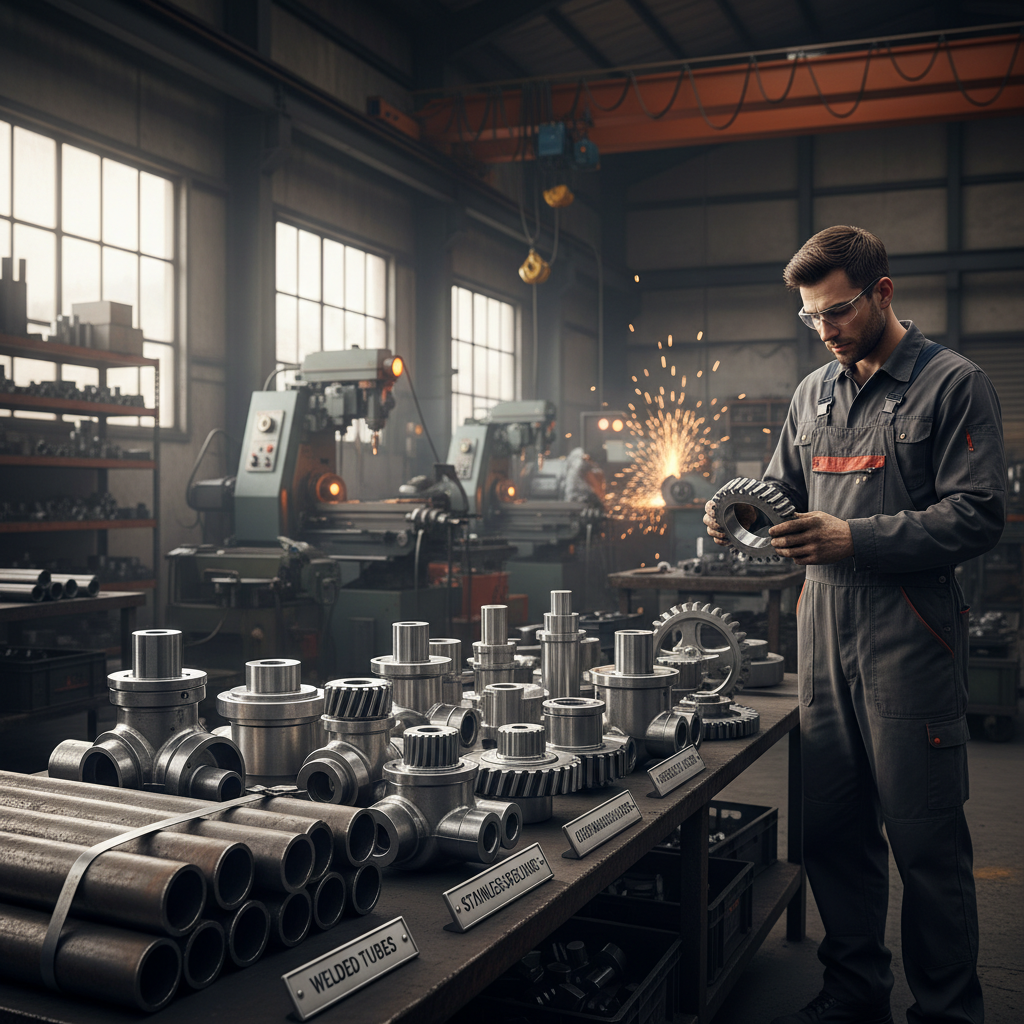
The landscape of modern industrial production relies heavily on the precision and reliability of mechanical component manufacturing, a sector that transforms raw metals into the essential building blocks of machinery. From the smallest precision screw to complex transmission systems, the ability to engineer components with micron-level accuracy determines the efficiency of entire production lines. In an era of rapid automation, the synergy between material science and machining technology has become the cornerstone of global infrastructure development.
Globally, the demand for high-performance parts is surging as industries shift toward electric mobility, aerospace innovation, and sustainable energy. According to ISO standards and industrial benchmarks, the integration of advanced CNC machining and additive manufacturing has reduced waste by nearly 20% in high-end workshops, yet the challenge remains in balancing cost-efficiency with extreme durability. This tension drives the constant evolution of manufacturing processes to meet increasingly stringent safety and performance requirements.
Understanding the nuances of this field allows companies to optimize their supply chains, reduce downtime, and foster innovation. Whether dealing with Aluminium Bar / Sheet or complex Machining Parts, the goal is to achieve a seamless fit and function that ensures long-term operational stability. By mastering the art and science of component fabrication, manufacturers can provide the tangible reliability that allows other sectors—from healthcare to heavy mining—to operate without failure.
The Global Relevance of Mechanical Component Manufacturing
The strategic importance of mechanical component manufacturing cannot be overstated, as it serves as the silent engine behind every mechanized society. From the transmission parts in an electric vehicle to the welded tubes in a chemical refinery, the precision of these components dictates the safety and scalability of the final product. Global supply chains are now pivoting toward "resilient manufacturing," where the ability to produce high-quality Assembled Parts and Casting Parts locally reduces dependency on volatile international shipping.
Furthermore, the intersection of geopolitical stability and industrial capacity has made the mastery of metal fabrication a national priority for many economies. The ability to pivot from producing simple Sheet Metal Parts to complex, high-tolerance Machining Parts allows a region to support a diverse array of industries, including medical device fabrication and aerospace engineering, ensuring economic agility and technological sovereignty.
Defining the Scope of Precision Component Fabrication
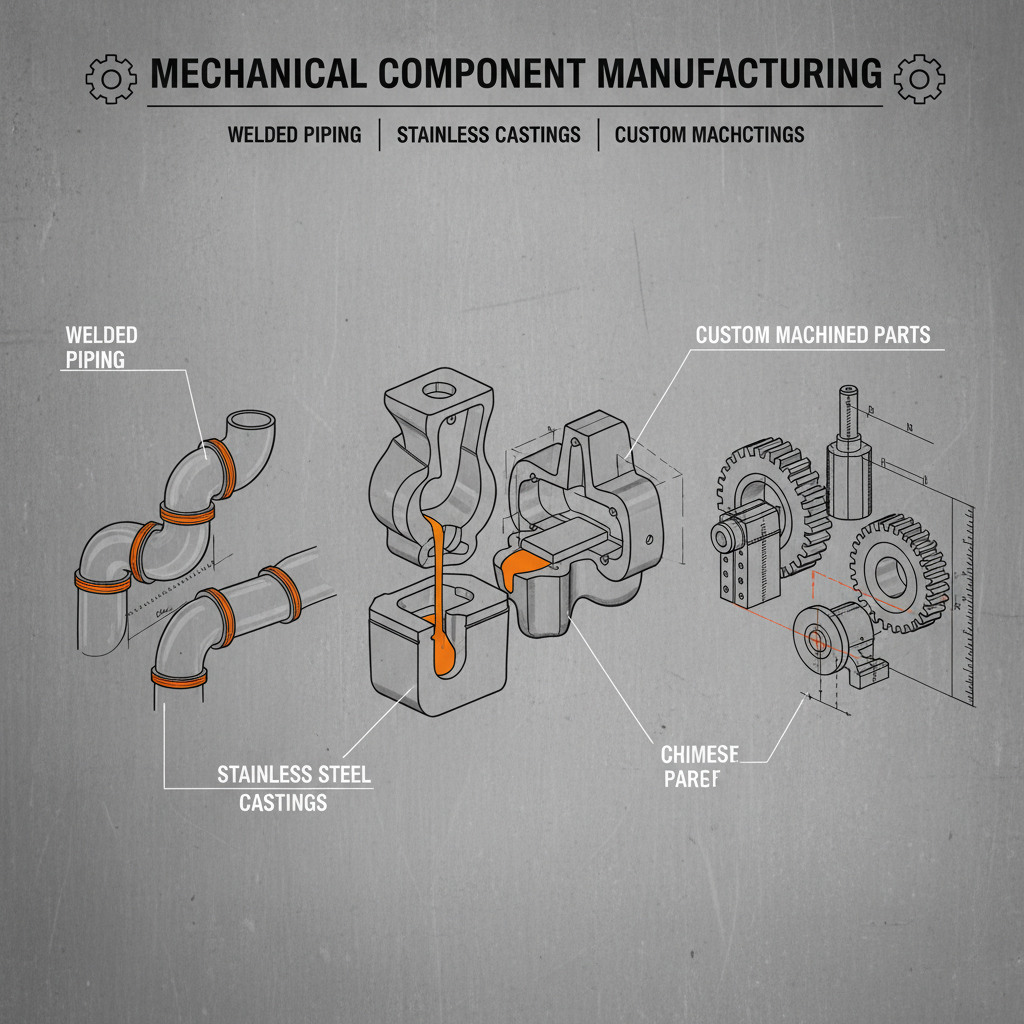
At its core, mechanical component manufacturing is the process of transforming raw materials—such as Copper Sheet, Bar and Foil, or Continuous Cast Iron Bar—into specific geometric forms that perform a mechanical function. This involves a sequence of operations including cutting, milling, turning, grinding, and assembling, all governed by strict technical drawings and tolerance specifications. It is the bridge between a theoretical CAD design and a physical, functioning machine.
Beyond simple shaping, this field encompasses the science of metallurgy and surface treatment. Ensuring that a part doesn't corrode in a saltwater environment or warp under extreme heat requires a deep understanding of material properties. Whether it is the selection of a specific Aluminium Bar alloy or the application of a protective coating on Welded Tubes, the "meaning" of manufacturing here is the intentional control of matter to achieve predictable performance.
In a humanitarian and social context, this capability enables the creation of essential infrastructure. For instance, the production of affordable water pumps for remote villages or the fabrication of prosthetic limbs relies on the same fundamental principles of component manufacturing. By lowering the cost and increasing the accessibility of precision parts, the industry directly contributes to global quality-of-life improvements.
Core Factors Driving Component Quality and Performance
Dimensional Accuracy is the first pillar of mechanical component manufacturing. In an assembly where hundreds of parts must fit together, a deviation of a few micrometers can lead to friction, overheating, or total mechanical failure. This is why the use of high-precision CNC machinery and rigorous CMM (Coordinate Measuring Machine) inspection is non-negotiable for high-end Machining Parts.
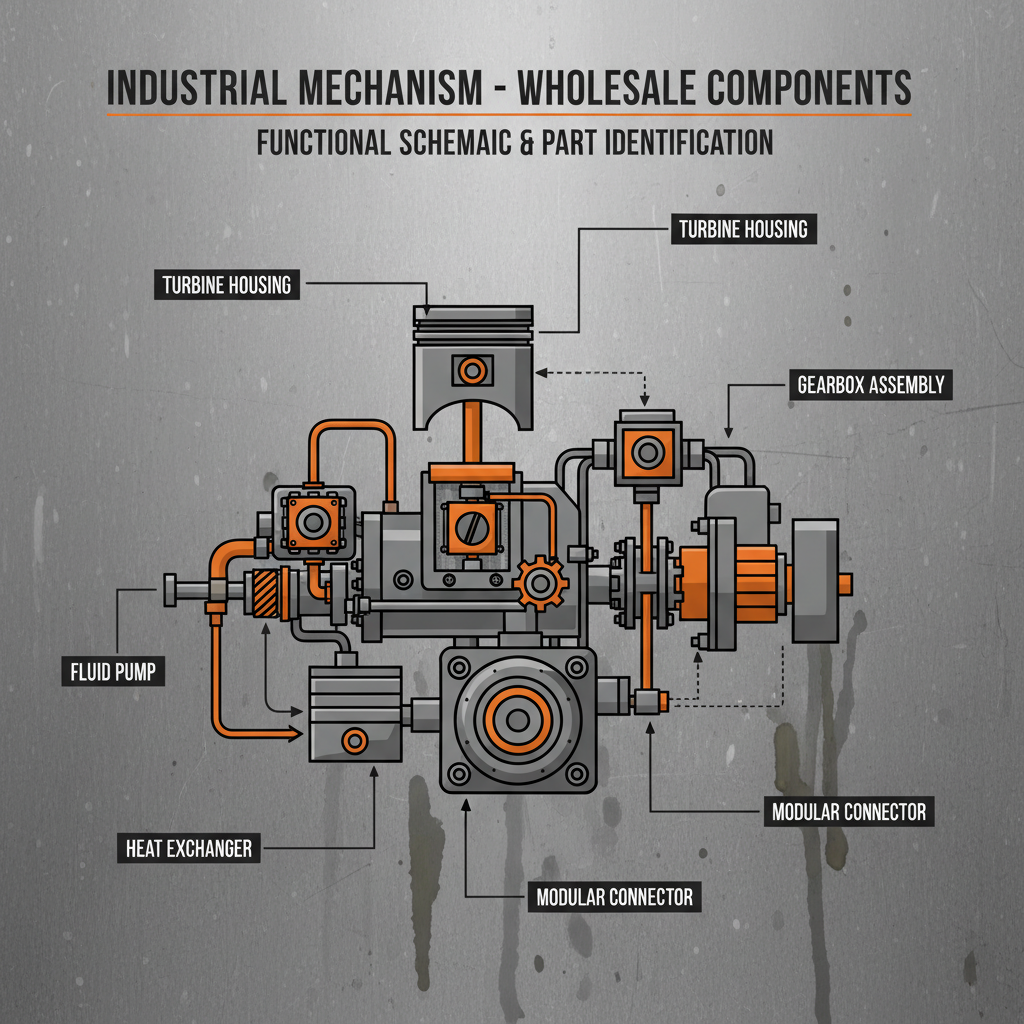
Material Integrity and Durability form the second critical factor. The choice between using a Casting Part for complex geometries or a forged component for high-stress loads depends on the intended application. Ensuring that the internal grain structure of the metal is consistent prevents fatigue cracks and extends the lifecycle of Transmission Parts, reducing the total cost of ownership for the end-user.
Scalability and Cost Efficiency complete the triad. A process that works for a single prototype must be adaptable for mass production without losing quality. By optimizing the layout of Sheet Metal Parts on a single sheet or implementing lean manufacturing cells for Assembled Parts, producers can achieve economies of scale that make advanced technology affordable for the general market.
Industrial Applications and Real-World Use Cases
The application of mechanical component manufacturing spans across nearly every physical industry. In the automotive sector, the transition to EVs has shifted the focus from internal combustion engine components to high-precision battery housings and lightweight Aluminium Bar frameworks. In the energy sector, the production of massive wind turbine gears requires specialized Casting Parts that can withstand immense torque and environmental erosion.
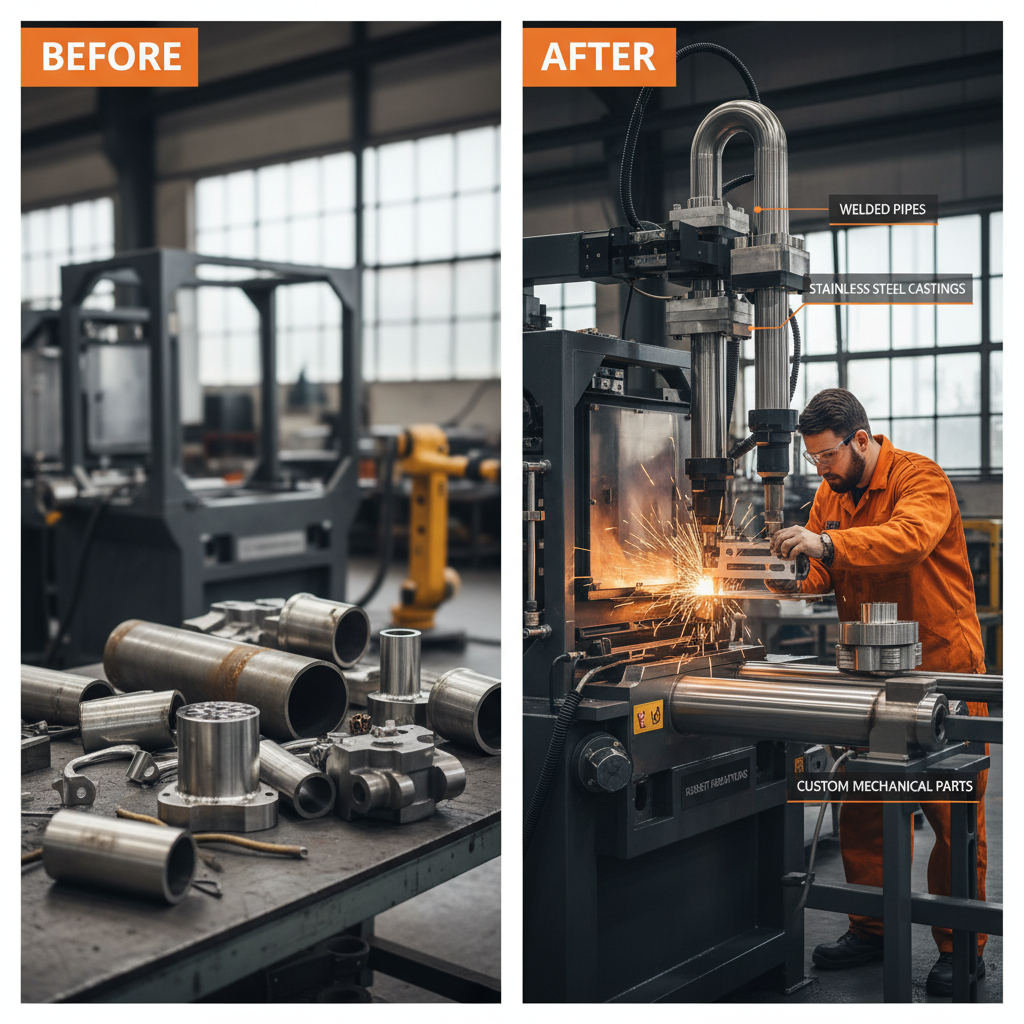
In remote industrial zones, such as deep-sea mining or arctic exploration, the reliability of mechanical parts is a matter of survival. Custom-engineered Welded Tubes and corrosion-resistant Copper Sheets are used to build conduits and housings that operate in extreme pressures. In these contexts, "off-the-shelf" parts are rarely sufficient; bespoke manufacturing ensures that every component is optimized for the specific atmospheric challenges of the site.
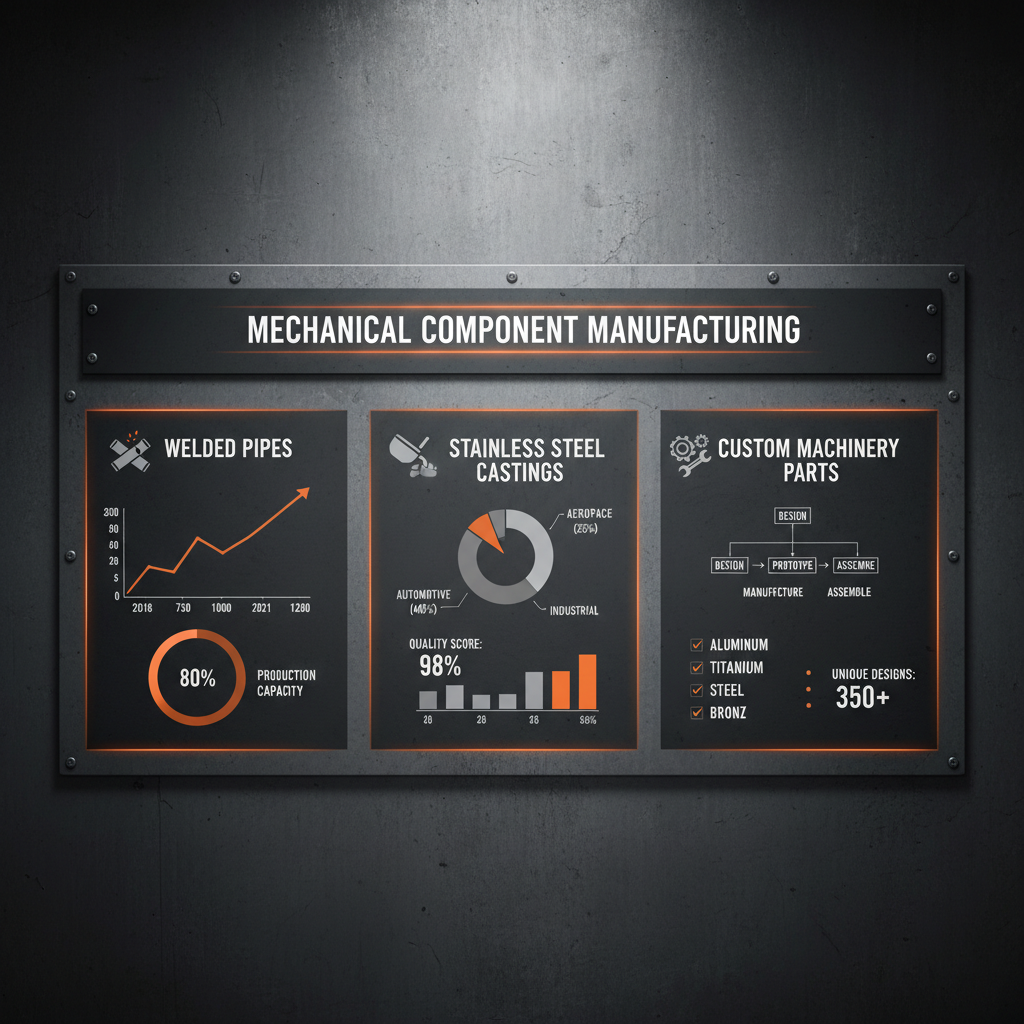
Performance Efficiency of Various Mechanical Component Manufacturing Methods
Long-Term Value: Sustainability and Reliability
The long-term value of investing in high-quality mechanical component manufacturing lies in the reduction of lifecycle costs. When components are engineered for maximum durability—using superior materials like high-grade Copper Sheet or reinforced Continuous Cast Iron Bar—the frequency of replacement decreases. This not only saves the operator money on spare parts but significantly reduces the environmental impact by minimizing industrial waste and energy consumption associated with frequent manufacturing cycles.
Beyond the balance sheet, there is an emotional and ethical dimension to reliability. In industries such as medical equipment or aerospace, a component failure is not just a financial loss but a risk to human life. The trust established between a manufacturer and a client is built on the consistency of these parts. Providing components that exceed safety standards fosters a culture of innovation, where engineers feel confident pushing the boundaries of design knowing that the underlying mechanical components will not fail.
Future Trends in Smart Manufacturing and Automation
The future of mechanical component manufacturing is being reshaped by the "Industry 4.0" paradigm. The integration of IoT (Internet of Things) sensors directly into the production of Transmission Parts allows for "predictive maintenance." Instead of replacing a part based on a schedule, sensors can signal when a component is actually wearing out, allowing for just-in-time replacement and zero unplanned downtime.
Digital Twins are also becoming standard. Before a single piece of Aluminium Bar is cut, a complete digital replica of the component is simulated under real-world stresses. This virtual validation ensures that the final Machining Parts are optimized for weight and strength, reducing material waste and accelerating the time-to-market for new products.
Furthermore, the shift toward "Green Manufacturing" is driving the adoption of biodegradable lubricants and energy-efficient CNC machines. By combining automation with sustainable policies, the industry is evolving from a traditional "smoke-stack" image to a high-tech, eco-friendly sector that supports the global transition to a circular economy.
Overcoming Technical Challenges in Modern Production
One of the primary challenges in mechanical component manufacturing is managing thermal deformation during high-speed machining. As tools cut through hard metals, the heat generated can cause the material to expand, leading to dimensional inaccuracies. Advanced solutions, such as cryogenic cooling and real-time thermal compensation software, are now being used to maintain tolerances even under extreme production speeds.
Another hurdle is the complexity of assembling heterogeneous materials. Combining Aluminium Bar with Copper Sheet or specialized plastics requires innovative joining techniques beyond traditional welding. The industry is turning to laser brazing and advanced adhesives to create strong, lightweight bonds that don't compromise the structural integrity of the Assembled Parts.
Finally, the skill gap in the workforce presents a significant bottleneck. The transition from manual lathes to complex multi-axis CNC centers requires a new breed of technician. The solution lies in the adoption of Augmented Reality (AR) training tools, which allow new operators to visualize the machining process in real-time, reducing errors and accelerating the learning curve for complex mechanical component manufacturing.
Comparative Analysis of Material Suitability for Mechanical Components
|
Material Type
|
Primary Manufacturing Method
|
Durability Rating (1-10)
|
Common Application
|
| Aluminium Bar/Sheet |
CNC Milling / Extrusion |
7 |
Lightweight Frames |
| Cast Iron Bar |
Casting / Boring |
9 |
Heavy Machinery Bases |
| Copper Sheet/Foil |
Stamping / Etching |
6 |
Electrical Terminals |
| Alloy Steel |
Precision Turning |
10 |
Transmission Gears |
| Welded Tubes |
Rolling / Welding |
8 |
Structural Frameworks |
| Sheet Metal |
Bending / Punching |
6 |
Electronic Enclosures |
FAQS
Depending on the requirement, the most common materials include aluminium bars and sheets for lightweight applications, alloy steels for high-stress parts, and copper for conductivity. Casting iron is often used for large, vibration-dampening bases, while welded tubes are preferred for structural components. The choice depends on the necessary balance between weight, strength, and corrosion resistance.
CNC (Computer Numerical Control) machining removes human error by using precise digital instructions to guide cutting tools. This allows for the creation of complex geometries with tolerances as tight as a few microns. It ensures that every part in a batch is identical, which is critical for the assembly of Transmission Parts and other interlocking mechanisms.
Casting involves pouring molten metal into a mold to create a near-net shape, which is ideal for complex, organic geometries and large volumes. Machining, on the other hand, is a subtractive process where material is removed from a solid block. Machining typically offers much higher precision and better surface finish but can be more wasteful of material than casting.
Durability is ensured through a combination of proper material selection, heat treatment (like annealing or quenching), and surface coatings. Implementing rigorous quality control checks, such as X-ray inspection for casting parts or hardness testing for machined components, ensures that there are no internal defects that could lead to premature failure.
In many cases, yes. Modular assembled parts allow for easier maintenance, as individual worn components can be replaced without discarding the entire unit. While the initial design and assembly process may be more complex, the long-term operational costs are often lower due to reduced downtime and simplified repair cycles.
Sustainability is being achieved through the use of recyclable alloys, additive manufacturing (3D printing) to reduce scrap metal, and the implementation of energy-efficient machinery. Many manufacturers are also switching to closed-loop coolant systems that filter and reuse cutting fluids, significantly reducing the chemical footprint of the production process.
Conclusion
In summary, mechanical component manufacturing is far more than just the act of cutting metal; it is a sophisticated discipline that blends material science, digital precision, and engineering intuition. By focusing on the core pillars of dimensional accuracy, material integrity, and scalable production, manufacturers can create the essential components that power everything from renewable energy grids to life-saving medical devices. The shift toward smart, sustainable fabrication ensures that this industry will remain the backbone of global technological progress for decades to come.
Looking forward, the integration of AI-driven design and additive manufacturing will further dissolve the boundaries between imagination and physical reality. For businesses seeking to optimize their operations, the key lies in partnering with manufacturers who prioritize both precision and sustainability. By investing in high-quality components today, industries can ensure a future of reliability, safety, and continuous innovation. Visit our website for more professional solutions: www.hmiecmsp.com