In the complex ecosystem of modern industrial manufacturing, machining parts serve as the fundamental building blocks for virtually every mechanical system. From the smallest precision gears in medical devices to massive structural components in aerospace engineering, the ability to shape raw materials into exact geometries is what drives global technological progress. Understanding the nuances of these components is not just about metallurgy, but about optimizing the intersection of performance, cost, and reliability.
The global demand for high-precision components has surged as industries shift toward automation and miniaturization. According to ISO standards and industrial market trends, the precision of machining parts directly correlates with the energy efficiency and lifespan of the final product. However, many enterprises struggle with the balance between achieving tight tolerances and maintaining a sustainable production cost, leading to a critical need for advanced machining strategies.
Whether you are sourcing complex assemblies or simple turned components, the strategic selection of materials and processes determines the success of your project. By focusing on the synergy between design and fabrication, companies can reduce waste and accelerate time-to-market. This guide explores the comprehensive landscape of machining, providing a roadmap for engineers and procurement specialists to optimize their component sourcing.
Global Relevance of Machining Parts
On a global scale, the production of machining parts acts as a barometer for industrial health. From the rapid industrialization of Southeast Asia to the high-tech hubs in Germany and Japan, the ability to manufacture components with micron-level precision enables the creation of everything from renewable energy turbines to advanced surgical robotics.
The integration of these parts into global supply chains ensures that complex machinery can be assembled across different continents while maintaining perfect interoperability. As the world moves toward Industry 4.0, the role of these components has evolved from simple hardware to integrated systems that often include embedded sensors and smart materials.
Definition and Industrial Significance
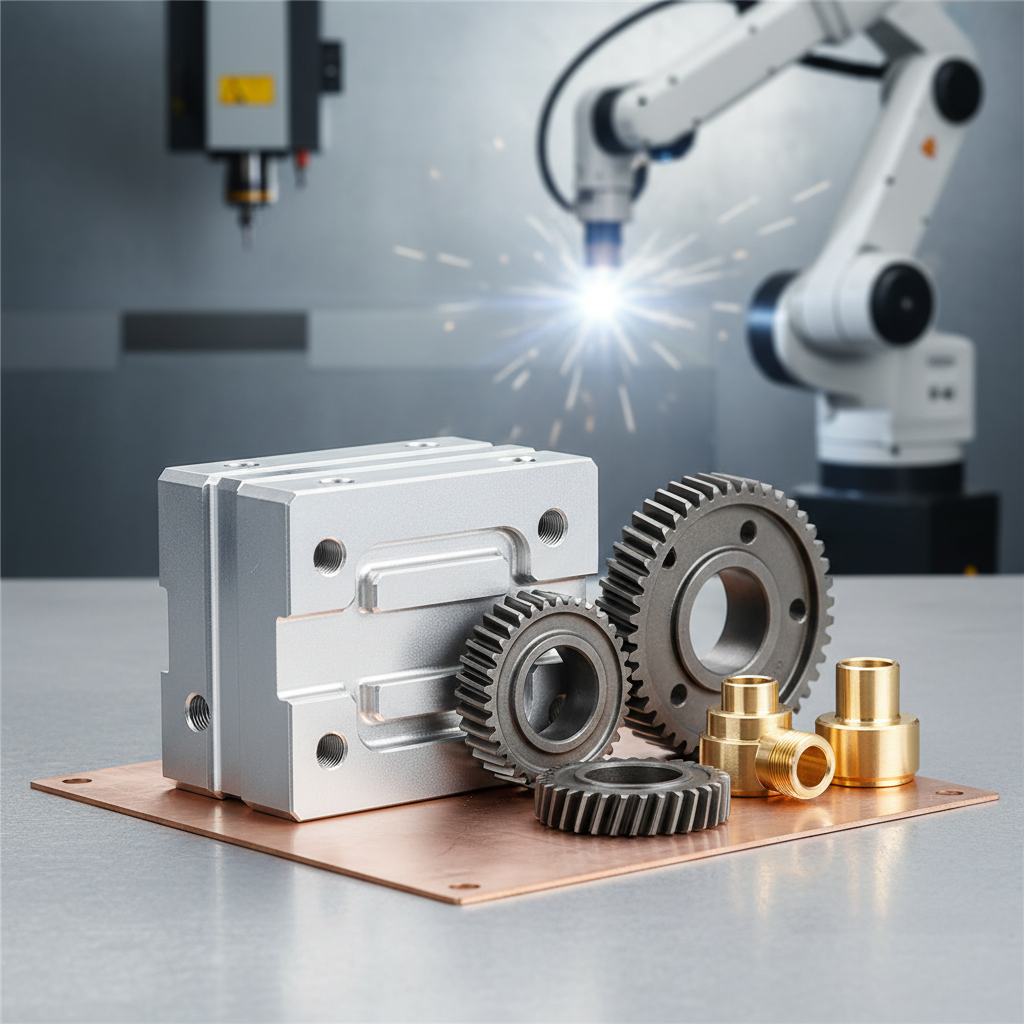
In simple terms, machining parts are components created by removing material from a raw workpiece—typically metal—using precise cutting tools. This subtractive process, which includes milling, turning, drilling, and grinding, transforms raw bars or sheets into functional geometry that meets strict engineering specifications.
Beyond the technical definition, these parts represent the physical manifestation of engineering intent. In modern industry, the significance of high-quality machining lies in its ability to facilitate "zero-failure" environments. In sectors like aerospace or medical implants, a deviation of a few microns can be the difference between a successful mission and a catastrophic failure.
Furthermore, the flexibility of machining allows for rapid prototyping and iterative design. Unlike molding or casting, which require expensive tooling, machining provides a direct path from a CAD model to a physical part, making it indispensable for innovation and the development of specialized, low-volume industrial equipment.
Core Factors Influencing Part Quality
The durability of machining parts is primarily determined by material selection and heat treatment. Choosing between aluminum for weight reduction or stainless steel for corrosion resistance is the first critical decision in the design phase, ensuring the part survives its operational environment.
Dimensional accuracy and surface finish are the hallmarks of professional machining. By utilizing CNC (Computer Numerical Control) technology, manufacturers can achieve repeatable tolerances that ensure seamless assembly, reducing the need for manual fitting and significantly lowering downstream labor costs.
Cost efficiency in the production of machining parts is not about choosing the cheapest method, but about optimizing the "cycle time." By streamlining tool paths and reducing material waste through strategic nesting, companies can maintain high quality while keeping unit costs competitive.
Practical Applications Across Industries
The application of machining parts is ubiquitous. In the automotive sector, precision-machined transmission components and engine blocks are essential for fuel efficiency. In the energy sector, custom-machined valves and couplings allow for the safe transport of hydrogen and natural gas in remote industrial zones.
Moreover, in specialized fields such as medical technology, these components form the core of prosthetic limbs and diagnostic equipment. The ability to machine biocompatible titanium ensures that implants are both durable and safe for human use, demonstrating how precision engineering directly impacts human quality of life.
Comparative Performance of Machining Parts Methods
Long-Term Value and Reliability
Investing in high-quality machining parts yields dividends in the form of reduced maintenance and extended equipment life. When parts are machined to precise specifications, friction is minimized and load distribution is optimized, which prevents premature wear and unexpected downtime in critical production lines.
Beyond the logic of cost-saving, there is an emotional value in reliability. For an engineer, the trust that a component will perform under extreme pressure—be it in a deep-sea oil rig or a satellite—is paramount. This reliability fosters innovation, as designers can push the limits of their creations knowing the hardware can support the vision.
Future Trends in Precision Machining
The future of machining parts is being reshaped by the digital twin concept. By creating a virtual replica of the part and the machining process, engineers can predict potential failures and optimize tool paths before a single piece of metal is cut, drastically reducing material waste.
Sustainability is also becoming a core driver. The industry is shifting toward "green machining," which involves using biodegradable lubricants and energy-efficient CNC machines. There is also an increasing trend toward hybrid manufacturing, combining 3D printing (additive) with precision machining (subtractive) to create complex geometries that were previously impossible.
Automation and AI are further augmenting the process. AI-driven monitoring systems can now detect tool wear in real-time, adjusting feed rates automatically to maintain consistency. This transition ensures that high-precision parts can be produced at a scale and speed that meets the demands of the burgeoning electric vehicle and robotics markets.
Overcoming Common Manufacturing Challenges
One of the most persistent challenges in producing machining parts is material deformation caused by internal stresses. When heavy amounts of material are removed, the part can "spring" or warp. Experts overcome this by implementing stress-relief annealing processes between roughing and finishing passes.
Another common hurdle is the trade-off between tolerance and cost. To solve this, designers are encouraged to apply "GD&T" (Geometric Dimensioning and Tolerancing) principles, which specify only the critical dimensions that actually affect function, allowing the manufacturer to use faster, less expensive processes for non-critical areas.
Finally, supply chain volatility often threatens production timelines. The solution lies in diversifying material sources and adopting "Just-in-Time" (JIT) manufacturing integrated with cloud-based inventory tracking, ensuring that the raw materials for machining are always available without incurring excessive storage costs.
Analysis of Machining Parts Production Challenges and Solutions
| Challenge Category |
Root Cause |
Expert Solution |
Impact Score (1-10) |
| Thermal Distortion |
Heat buildup during cutting |
High-pressure coolant systems |
9 |
| Surface Roughness |
Tool vibration/chatter |
Optimized spindle speeds |
8 |
| Material Waste |
Inefficient stock sizing |
Near-net-shape casting pre-forms |
7 |
| Dimensional Drift |
Tool wear over long runs |
In-process laser probing |
10 |
| Lead Time Lag |
Manual setup bottlenecks |
Standardized modular fixturing |
8 |
| Material Hardness |
Tough alloy compositions |
PCD/CBN coated tooling |
9 |
FAQS
The most common materials include aluminum (for lightweight strength), stainless steel (for corrosion resistance), brass, and titanium (for aerospace/medical). The choice depends entirely on the part's environmental exposure, load requirements, and budget. For example, aluminum is preferred for heat sinks, while titanium is essential for implants.
Generally, CNC turning is used for cylindrical or symmetrical parts (like shafts or bolts) where the workpiece rotates. CNC milling is used for flat or complex prismatic shapes (like brackets or housings) where the tool rotates. If your part is round, turn it; if it's blocky or complex, mill it.
Standard machining often holds tolerances of +/- 0.125mm. However, high-precision "tight" tolerances can reach +/- 0.01mm or even +/- 0.005mm in specialized grinding operations. Achieving these requires higher-end machinery and more frequent inspections, which increases the cost per part.
Yes, machining is the ideal choice for prototyping because it requires no custom molds or tooling. You can go from a digital design to a functional part in hours. This allows engineers to test fit and function before committing to high-volume production methods like die casting.
Surface finishing—such as anodizing, powder coating, or bead blasting—protects the part from oxidation and reduces friction. For high-performance machining parts, a polished finish can prevent stress concentrations that lead to cracks, significantly increasing the fatigue life of the component.
Cost can be reduced by simplifying the geometry to avoid deep pockets or complex angles that require multiple setups. Using standard material sizes to reduce waste and widening tolerances on non-critical dimensions are also highly effective ways to lower the final price without compromising quality.
Conclusion
In summary, machining parts are the invisible foundation of modern engineering, bridging the gap between conceptual design and physical reality. From the selection of the right alloy to the implementation of AI-driven CNC processes, every detail in the machining workflow contributes to the safety, efficiency, and longevity of the end product. By prioritizing precision and understanding the interplay between material properties and fabrication methods, businesses can ensure their mechanical systems operate at peak performance.
Looking ahead, the industry is moving toward a more sustainable, integrated future where hybrid manufacturing and digital twins eliminate waste and maximize precision. For companies seeking to maintain a competitive edge, the key lies in partnering with manufacturers who embrace these technological shifts while maintaining a rigorous commitment to quality. We invite you to explore how our expertise in precision fabrication can elevate your next project. Visit our website: www.hmiecmsp.com