









What Is Die Casting Used For & Products Made From It?
Precision metal components for automotive, aerospace, electronics & industrial machinery — engineered to reduce cost, weight & lead time
📑 Table of Contents
⚠️ The Real Cost of Sourcing Die Cast Parts Wrong
Every year, procurement and engineering teams lose millions due to poor supplier choices in die casting. Here are the most painful mistakes we see across the industry:
💸 Hidden Cost Overruns
37% of buyers report final part costs exceeding initial quotes by over 20% due to tooling changes, material waste & rework. (NADCA 2025 benchmark)
⏳ Lead Time Nightmares
Average die casting lead time from unvetted suppliers: 14–18 weeks. Production delays cascade into lost revenue & penalty clauses.
🔩 Inconsistent Quality
Porosity, flash, dimensional drift — 1 in 4 parts from low-cost suppliers fails first inspection. Rework costs eat 12–18% of PO value.
🌍 Compliance & Shipping Risks
Missing CE, RoHS or specific industry certs leads to customs holds. $2,800+ per delayed shipment in demurrage & admin fees.
✅ The solution? A partner with integrated quality control, transparent pricing & global logistics experience — like Hebei Windzone.
🔍 What Is Die Casting Used For? — The Complete Picture
Die casting is a high-pressure metal-forming process where molten metal (aluminium, zinc, magnesium, copper alloys) is injected into a steel mould at 1,500–25,000 psi. The result: near-net-shape parts with exceptional dimensional accuracy, smooth surfaces & repeatability — often requiring little to no secondary machining.
So what products are made from die casting? The short answer: thousands of critical components across every major industry. Here’s where it dominates:
🚗
Automotive
Engine blocks, transmission housings, steering knuckles, EV battery enclosures, brake calipers, structural frames. ~65% of all die cast parts go to automotive.
✈️
Aerospace & Defence
Instrument housings, bracket assemblies, heat sinks, avionics chassis, landing gear components. Thin walls (0.8mm) possible with magnesium alloys.
📱
Electronics & Telecom
Smartphone frames, laptop chassis, connector shells, LED heatsinks, 5G filter housings, server racks. 0.5mm wall thickness achievable.
🏭
Industrial Machinery
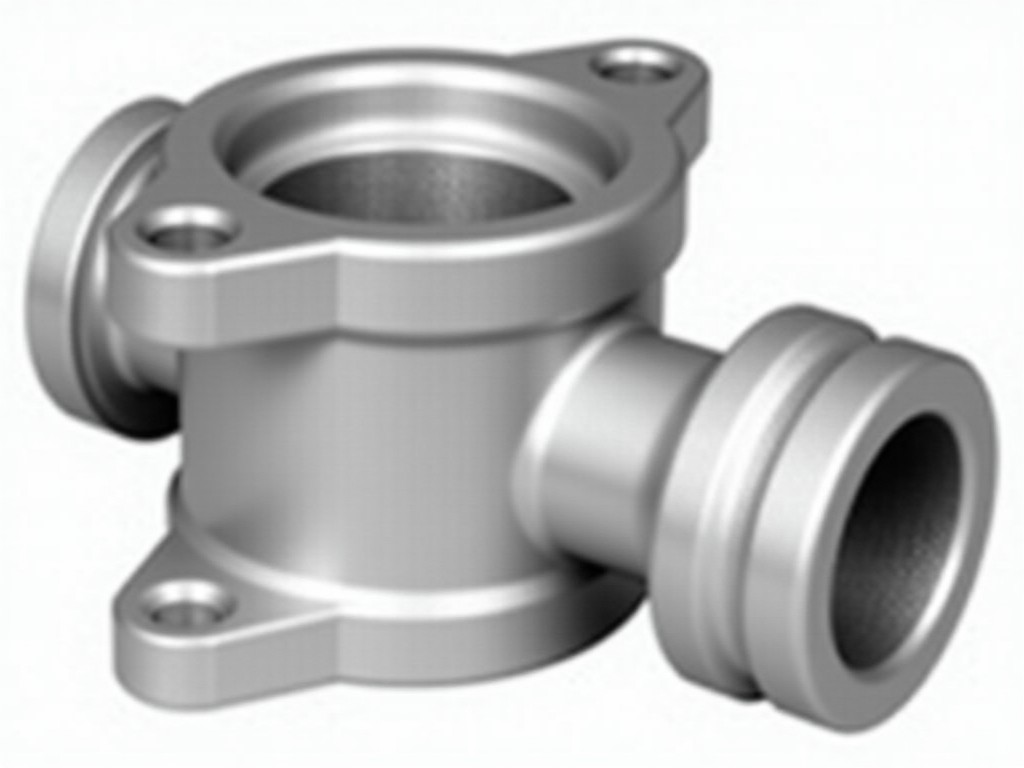
Pump housings, valve bodies, gearboxes, motor frames, hydraulic manifolds, conveyor rollers. 30–50% lighter than sand casting equivalents.
🏥
Medical Devices
Surgical instrument handles, imaging equipment frames, diagnostic device housings, dental tool components. FDA & ISO 13485 compliant.
🔦
Lighting & Energy
LED heatsinks, solar junction boxes, wind turbine sensors, streetlight housings, EV charger connectors. Thermal conductivity up to 200 W/m·K.
👉 Why does this matter to you? If you're sourcing any of these components, die casting delivers 15–40% cost savings over CNC machining, with 5–10x faster cycle times for medium-to-high volumes.
📊 Die Casting Technical Specifications — At a Glance
Use this table to compare capabilities across alloys. All data verified per NADCA & ISO 9001 standards.
| Parameter | Aluminium (A380) | Zinc (Zamak 3) | Magnesium (AZ91D) | Copper (C87800) |
|---|---|---|---|---|
| Tensile Strength (MPa) | 324 | 283 | 230 | 380 |
| Yield Strength (MPa) | 160 | 221 | 150 | 275 |
| Elongation (%) | 3.5 | 10 | 3 | 15 |
| Thermal Conductivity (W/m·K) | 96 | 113 | 72 | 208 |
| Min Wall Thickness (mm) | 0.9 | 0.5 | 0.8 | 1.2 |
| Typical Cycle Time (s) | 30–60 | 15–40 | 25–50 | 45–90 |
🔧 Data sourced from NADCA 2025 Handbook & internal Hebei Windzone testing. Tolerances: ±0.05mm typical for aluminium, ±0.03mm for zinc.
🏭 Real-World Application: Die Casting in Action
Case in point: A European EV manufacturer needed a lightweight, thermally efficient battery enclosure. They turned to Hebei Windzone for a high-pressure aluminium die casting solution. The result: 42% lighter than steel fabrication, 28% lower per-unit cost, and 6-week lead time — 3 weeks faster than their previous supplier.
✅ Key results from this project:
- Weight reduction: 4.2 kg → 2.4 kg
- Surface finish: Ra 1.6 µm — no secondary machining needed
- Pressure tightness: passed 8 bar helium leak test
- Annual volume: 120,000 units — 99.7% yield rate
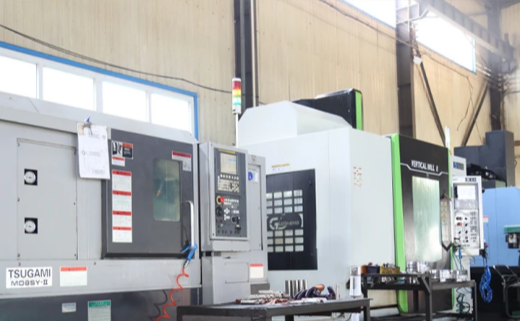
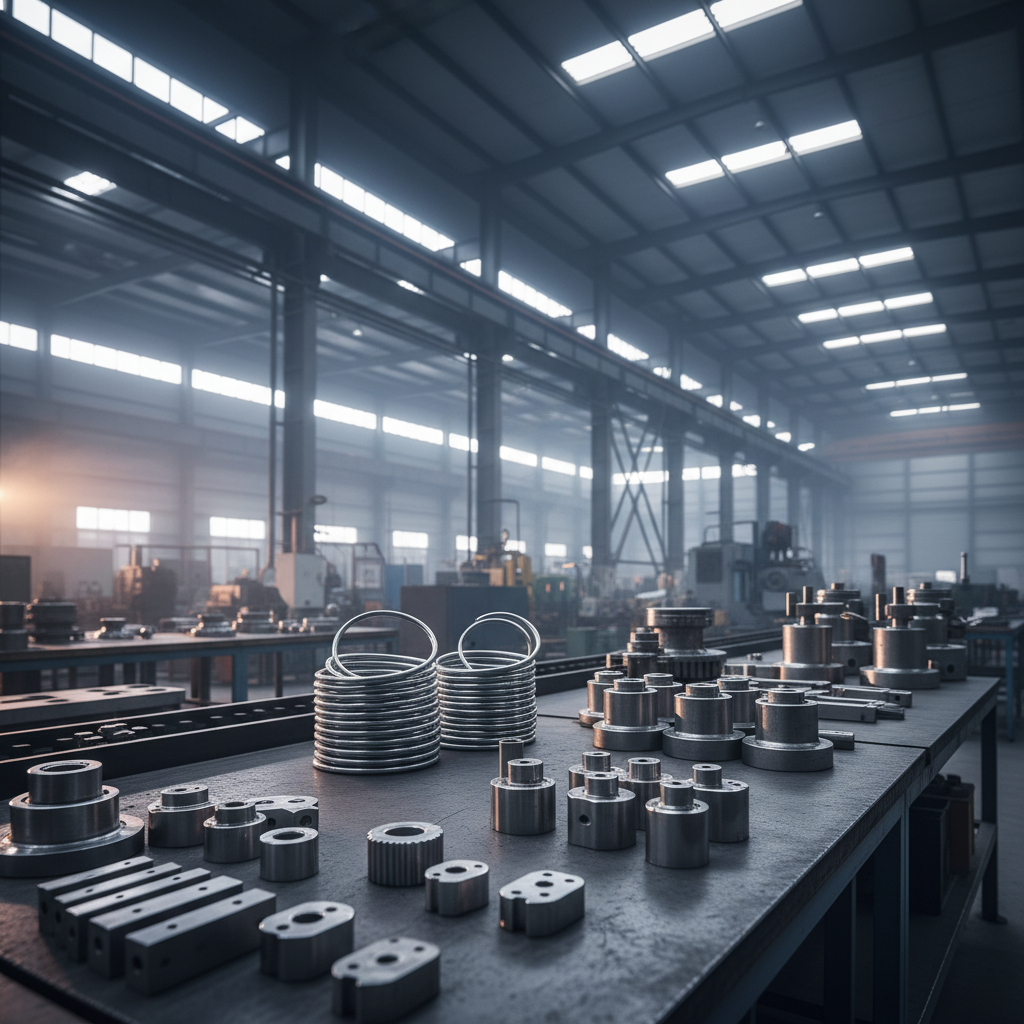
Hebei Windzone production floor
❓ Frequently Asked Questions About Die Casting
🔹 What is die casting used for in automotive?
Die casting is used extensively for engine blocks, transmission housings, steering knuckles, brake calipers, EV battery enclosures, and structural frames. It delivers lightweight, high-strength parts at high volume with excellent repeatability.
🔹 What products are made from die casting in consumer electronics?
Common products include smartphone frames, laptop chassis, tablet bodies, smartwatch cases, connector shells, LED heatsinks, and 5G filter housings. Aluminium and magnesium alloys are preferred for their light weight and thermal management.
🔹 How does die casting compare to CNC machining for cost?
For volumes above 1,000–2,000 units/year, die casting is 30–50% cheaper per part than CNC machining. The trade-off is higher upfront tooling cost ($5k–$50k), but per-part savings scale rapidly with volume.
🔹 What is the minimum order quantity (MOQ) for die casting?
At Hebei Windzone, we offer flexible MOQs from 500 to 5,000 units depending on part complexity and alloy. We also support prototype runs with rapid tooling for pilot testing.
🔹 How long does die casting tooling take?
Standard tooling: 4–6 weeks. Rapid tooling: 2–3 weeks. We use conformal cooling channels to reduce cycle time and improve die life (500k–1M shots).
🔹 What certifications do your die cast parts carry?
Our parts are ISO 9001:2015, CE, RoHS, REACH, and UL-recognized. We also provide material certs (EN 10204 3.1) and dimensional inspection reports (CMM) with every shipment.
🔹 Can you help with design for manufacturability (DFM)?
Absolutely. Our engineering team provides free DFM feedback within 48 hours of receiving your 3D model. We optimize wall thickness, draft angles, fillets, and gating to reduce cost and improve quality.
💬 Real Conversations with Our Clients

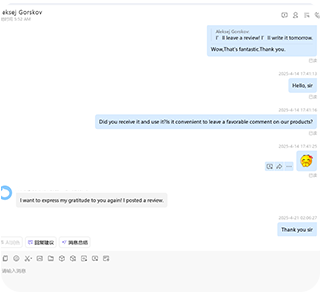
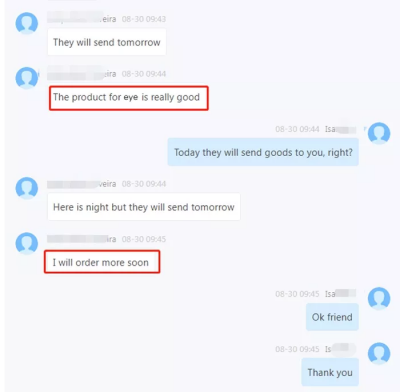
* Screenshots shared with permission. Real client names protected.
⭐ What Our Customers Say About Our Die Casting Service

Anders N.
Supply Chain Manager, Denmark
"We've ordered over 200k zinc die cast parts from Windzone. Zero defects in the last 3 shipments. Their QC is world-class."

Paolo R.
R&D Director, Italian Industrial Automation
"The DFM support from Windzone helped us reduce part weight by 22% while maintaining strength. Lead time was 5 weeks — 2 weeks faster than our Chinese supplier."

Jennifer W.
VP Operations, US Medical Device Manufacturer
"FDA-compliant aluminium die cast housings delivered on time, every time. Their documentation and traceability are audit-ready."

✍️ About the Author
Zhang Wei — Senior Technical Advisor at Hebei Windzone. With 22 years in die casting and precision machining, Zhang has overseen 400+ tooling projects for clients across 30+ countries. He holds a Master's in Materials Engineering and is a certified NADCA die casting specialist.
🚀 Ready to Source Better Die Cast Parts?
Get a free DFM analysis + quote within 24 hours. First-time buyers receive free sample parts and a 30-day money-back guarantee on tooling quality.
📬 Or visit: hmiecmsp.com/contactus — We speak English, German, French & Mandarin.
🔒 Your information is protected under our privacy policy. No spam, ever.



🏆 Trusted by Global Manufacturers
"We switched to Hebei Windzone for our aluminium die cast housings. Cost dropped 31%, lead time shrank from 12 to 7 weeks, and first-pass yield improved from 88% to 97%."
Markus V.
Procurement Director, German Automotive Tier 1
"The technical team at Windzone helped us redesign a zinc die cast connector housing. We saved 0.12 kg per part and $0.58 per unit — across 400k units/year, that's a game changer."
Sarah L.
Senior ME Manager, US Electronics OEM