





Professional Guide to Precision Mechanical Parts Design and Efficiency
Mastering Mechanical Parts Design: A Guide to Precision and Efficiency
In the modern industrial landscape, the foundation of any successful machine lies in the quality of its components. Professional mechanical parts design is not merely about drawing a shape; it is a complex synergy of material science, physics, and engineering precision. Whether you are developing a prototype for a startup or optimizing a mass-production line, the design phase dictates the longevity, cost, and performance of the final product. By integrating advanced CAD tools and lean manufacturing principles, companies can significantly reduce time-to-market while enhancing product reliability. This guide explores the critical elements of high-performance design and how to achieve industrial-grade results.
The Core Principles of Mechanical Parts Design
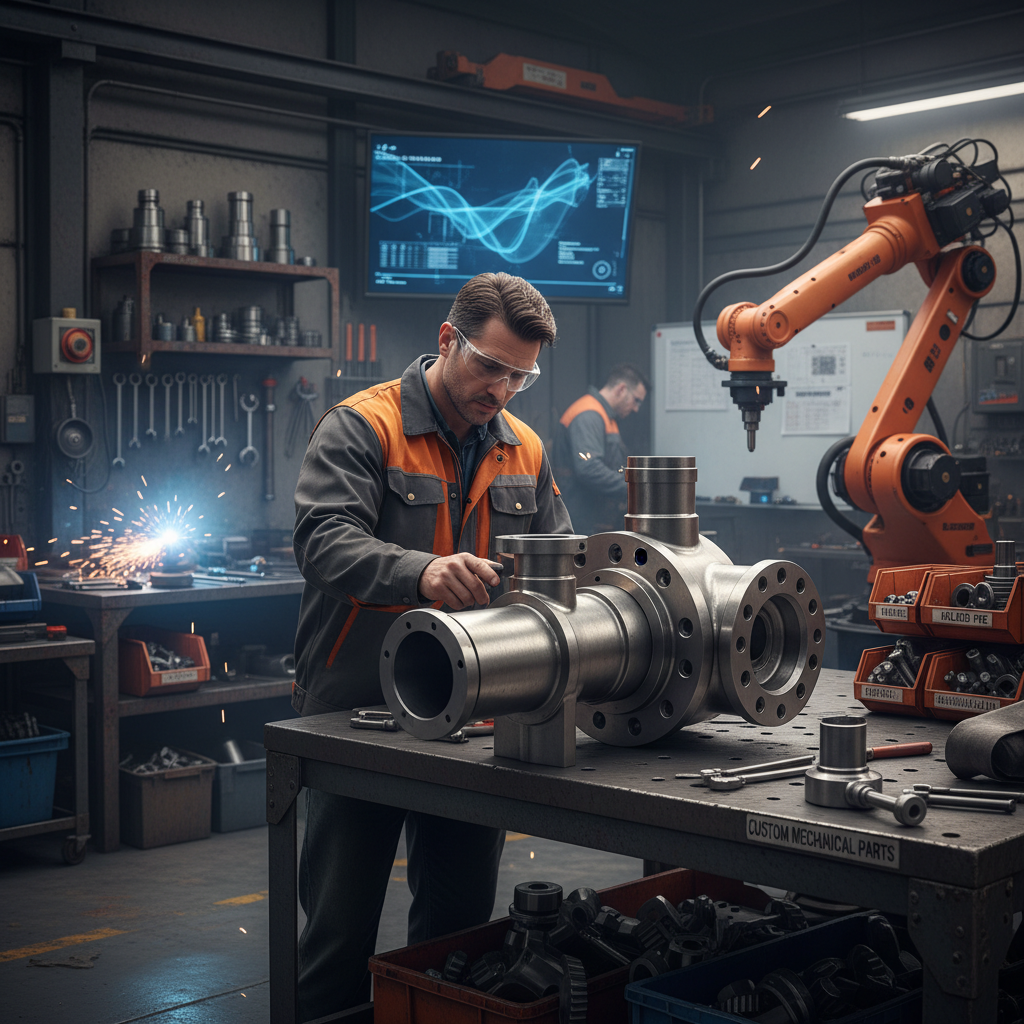
Effective mechanical parts design starts with a deep understanding of the part's intended function. The primary goal is to balance structural integrity with weight optimization. Engineers must consider the "Load Path"—the route through which forces travel through a part—to ensure that no single point suffers from excessive stress, which could lead to premature failure. Additionally, Design for Manufacturing (DFM) is crucial; a part that is theoretically perfect in a 3D model but impossible to machine is a failure in practical terms. By simplifying geometries and standardizing fastener sizes, designers can lower production costs and reduce assembly errors.
Design Tip: Always prioritize a "Safety Factor" in your calculations. A safety factor of 1.5x to 3x the maximum expected load ensures that the part can handle unexpected surges in stress without catastrophic failure.
Material Selection for High-Performance Parts
Choosing the right material is perhaps the most critical decision in mechanical parts design. The choice depends on environmental factors: will the part be exposed to corrosive chemicals, extreme heat, or constant vibration? For instance, while aluminum offers an excellent strength-to-weight ratio for aerospace components, stainless steel is indispensable for food-grade machinery due to its corrosion resistance. Advanced polymers are also gaining ground for lightweight applications where flexibility is required. Understanding the trade-offs between hardness, ductility, and thermal expansion is what separates an amateur design from a professional industrial solution.
Material Selection Checklist:
• Yield Strength: Can it withstand the maximum load without permanent deformation?
• Wear Resistance: How will the surface react to friction over time?
• Thermal Stability: Does the part maintain its dimensions at operating temperatures?
• Cost-Effectiveness: Is the material cost justified by the performance gain?
Comparing Manufacturing Methods in Mechanical Parts Design
The method of fabrication deeply influences the mechanical parts design process. CNC machining allows for extreme precision and tight tolerances, making it ideal for complex engine components. In contrast, 3D printing (Additive Manufacturing) allows for organic shapes and internal lattices that are impossible to machine. For high-volume production, injection molding or die casting is the gold standard to keep unit costs low. The following table compares the most common methods used in modern engineering to help you choose the right path for your project.
Optimizing Tolerances and Fits
In the world of mechanical parts design, "perfect" dimensions do not exist. Instead, we work with tolerances—the permissible limit of variation in a physical dimension. Over-specifying tight tolerances (e.g., requiring micron-level precision where a millimeter would suffice) exponentially increases manufacturing costs and scrap rates. Professional designers utilize the "Fit" system: Clearance fits for parts that must rotate or slide, Transition fits for accurate location, and Interference fits for parts that must be pressed together to stay immobile. Mastery of these concepts ensures that the final assembly is seamless and functional.
The Role of Simulation and Prototyping
Before a single piece of metal is cut, modern mechanical parts design relies heavily on Finite Element Analysis (FEA) and Computational Fluid Dynamics (CFD). These simulation tools allow engineers to visualize stress concentrations and heat distribution in a virtual environment. By identifying "hot spots" where the material is likely to fail, designers can reinforce specific areas or remove unnecessary material to save weight. This iterative process of simulation, rapid prototyping (usually via 3D printing), and testing reduces the risk of costly redesigns during the mass-production phase.
Standard Specifications for Industrial Component Design
Consistency is key to global trade and interoperability. Professional mechanical parts design follows international standards such as ISO, ASME, or DIN. These standards govern everything from the thread pitch of a screw to the surface roughness of a polished shaft. When parts are designed to these specifications, they can be sourced from different suppliers worldwide and still fit together perfectly. Below is a typical specification table for a high-precision mechanical coupling designed for industrial use.
Conclusion: Elevating Your Product with Precision Design
Exceptional mechanical parts design is the bridge between a conceptual idea and a market-ready product. By focusing on the intersection of material science, manufacturability, and rigorous simulation, companies can create components that are not only durable but also cost-efficient to produce. In an era of global competition, the ability to optimize every millimeter of a part can provide a significant competitive edge. Whether you are refining a single gear or an entire robotic assembly, investing in professional design principles is the only way to ensure long-term industrial success.
Frequently Asked Questions (FAQs)
What are the most common mistakes in mechanical parts design?
The most frequent error is ignoring Design for Manufacturing (DFM). Many designers create complex geometries in CAD that are impossible for a CNC machine to reach or too expensive to mold. Another common mistake is over-tolerancing, where a designer specifies an unnecessarily tight tolerance, driving up the cost of the part without providing any actual functional benefit. Lastly, failing to account for thermal expansion in environments with temperature fluctuations can lead to parts seizing or loosening over time. Proper validation through simulation and consultation with manufacturing experts can eliminate these issues early.
How do I choose between CNC machining and 3D printing for my parts?
The choice depends on your project stage and performance requirements. 3D printing is ideal for rapid prototyping, complex internal geometries, and low-volume custom parts where speed is more important than absolute precision. However, 3D printed parts often lack the strength and surface finish of machined parts. CNC machining is the preferred choice for final production parts that require high strength, precise tolerances, and a professional surface finish. If you need a part that can withstand high mechanical stress and must fit perfectly into a larger assembly, CNC is the way to go.
Why is material certification important in mechanical design?
Material certification, such as Mill Test Reports (MTRs), ensures that the metal or polymer used in production matches the chemical and physical properties specified in the design. In critical applications—such as aerospace, medical devices, or heavy machinery—using a material that is slightly off-spec can lead to catastrophic failure. Certification provides a paper trail that proves the material's yield strength, hardness, and composition. When working with a professional partner like HMIE CMSP, ensuring material traceability is a standard part of the quality assurance process.
What is the impact of surface finish on part longevity?
Surface finish is not just about aesthetics; it directly impacts the wear and fatigue life of a component. A rough surface contains microscopic "peaks and valleys" that can act as stress concentrators, making the part more susceptible to cracks and fatigue failure. Furthermore, in sliding components, a poor surface finish increases friction and heat generation, leading to rapid wear. Polishing or grinding surfaces to a specific Ra (Roughness Average) value reduces friction, improves the seal between mating parts, and significantly extends the operational lifespan of the machinery.