





When evaluating drill machine parts price, procurement managers in the metal products manufacturing sector must look beyond the initial quote. In the complex ecosystem of other metal products manufacturing, the cost of a component is inextricably linked to its metallurgical grade, machining precision, and long-term operational durability.
The primary challenge for buyers is the "low-cost trap," where inferior material substitutions lead to premature part failure, increased downtime, and higher total cost of ownership. Understanding the drivers of pricing—from casting methods to surface treatments—is essential for maintaining high-performance drilling operations without eroding profit margins.
This analysis provides a comprehensive framework for decoding pricing structures, evaluating material trade-offs, and identifying the technical markers of high-value components to ensure a balanced investment in replacement and OEM parts.

Direct Cost Drivers for Precision Drill Components

The base price of drill machine parts is primarily dictated by the initial forming process and the raw material volume. In the metal products industry, casting parts and machining parts represent the bulk of these components. The choice between sand casting, investment casting, or precision forging fundamentally changes the unit cost, as each method offers different levels of near-net-shape accuracy.
Beyond the raw material, labor intensity during the finishing phase adds significant value. For complex assembled parts, the cost includes not only the individual mechanical parts but also the quality control checks required to ensure alignment and fit. HEBEI WINDZONE leverages vertically integrated casting and CNC machining to optimize these direct costs for international buyers.
Material Grade Impact on Component Pricing
Material selection is the most critical variable in determining drill machine parts price. For instance, gray iron (HT200/HT250) is often cost-effective for parts requiring high damping and wear resistance. However, for components subject to high impulse or repetitive stress, ductile iron (QT400-15/QT450-10) is required, which carries a premium due to its superior tensile strength and elongation properties.
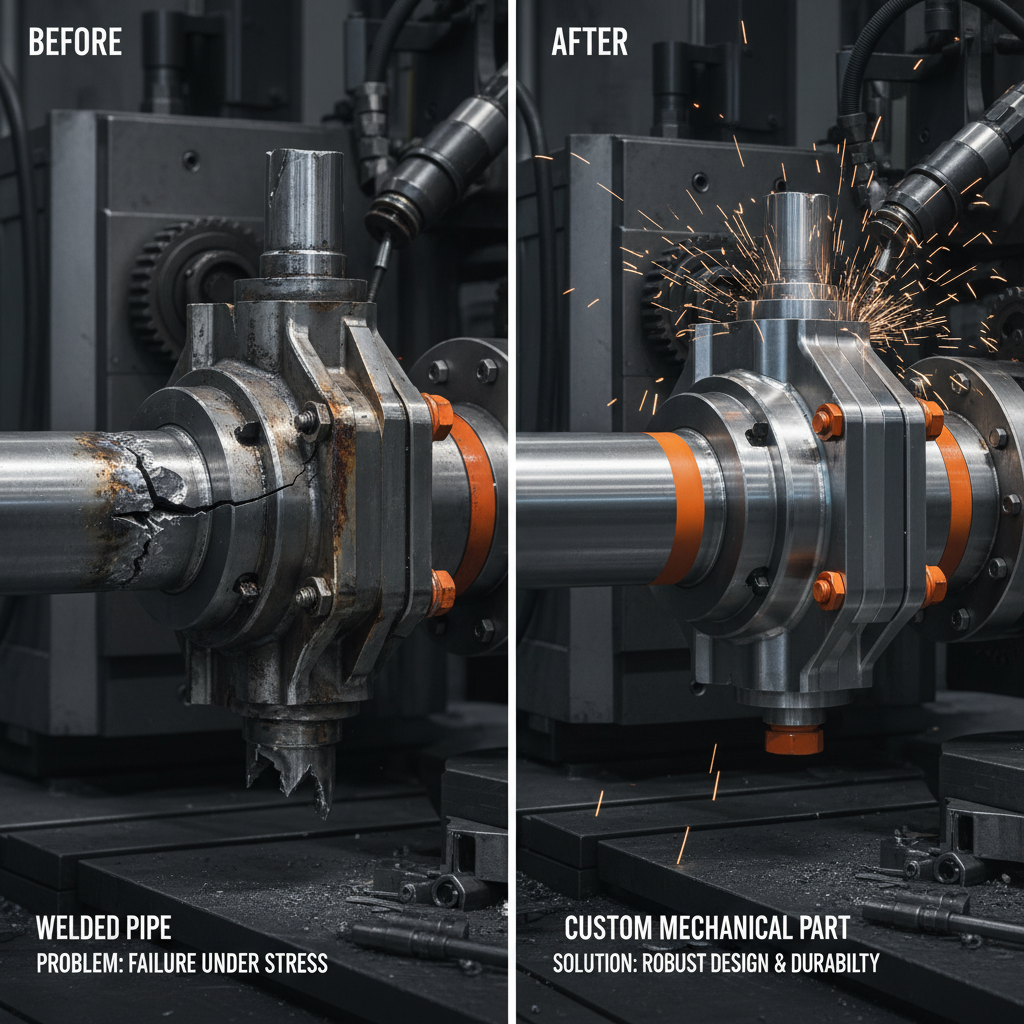
Substituting a lower grade—such as using HT150 where HT250 is specified—might lower the purchase price but can reduce tensile strength by up to 40%. This leads to fatigue cracking and premature failure. High-value procurement focuses on metallurgical integrity, ensuring that each melt is spectro-analyzed to prevent costly material swaps that compromise equipment safety.
The Role of CNC Machining and Tolerances in Cost
Precision is a priced commodity in the metal products manufacturing sector. The difference between a general tolerance of ±0.1mm and a critical bore tolerance of ±0.05mm can significantly impact the final price. Tighter tolerances require slower machining speeds, more frequent tool changes, and CMM (Coordinate Measuring Machine) validation, all of which add to the production overhead.
Surface roughness, measured in Ra, also influences cost. Achieving a seal-face finish of Ra 1.6 μm requires precision grinding or specialized CNC tooling compared to a standard cast finish. For professional-grade drilling parts, investing in these precision finishes prevents leakage and premature seal wear, shifting the cost from "reactive repair" to "proactive investment."
Analyzing Total Cost of Ownership (TCO) Factors
To understand the real drill machine parts price, one must evaluate the Total Cost of Ownership (TCO). A low-cost part that lasts 1,000 hours is significantly more expensive than a premium part that lasts 3,000 hours when factoring in labor for replacement and lost production revenue.
The illustrative framework above demonstrates the relative impact of various cost drivers on the TCO. While the initial purchase price is the most visible, "Downtime Cost" and "Replacement Frequency" often represent the largest financial drains on a manufacturing facility. High-grade materials and precision machining directly reduce these hidden costs.
Surface Protection and Environmental Longevity
Environmental conditions dictate the necessity—and cost—of surface treatments. For drill parts operating in corrosive environments, bare cast finishes are insufficient. Options such as zinc plating (Zn8–12μm), epoxy coating, or powder coating are added to the price to ensure longevity. Salt-spray testing (typically from 72 to 240 hours) validates these treatments.
Choosing the correct coating prevents oxidation and surface pitting, which can act as stress concentrators leading to part failure. While a powder-coated part has a higher upfront cost, it eliminates the need for frequent anti-rust applications and reduces the risk of corrosion-induced dimensional instability in critical fitting areas.
Common Pricing Pitfalls in OEM vs. Aftermarket
Many buyers struggle with the price gap between Original Equipment Manufacturer (OEM) parts and high-quality aftermarket alternatives. OEMs often charge a significant premium for the brand name. However, sourcing equivalent castings directly from certified manufacturers can reduce landed costs by 20–35% without sacrificing quality, provided the supplier follows ISO 9001 and CE standards.
The risk in the aftermarket is the lack of compliance documentation. Without mill certificates or material test reports, a "cheap" part can become a liability. Professional procurement requires a balance: seeking the cost advantage of direct-from-foundry pricing while demanding the same traceability and tolerance reports provided by OEM suppliers.
Strategic Procurement Decision Framework
Choosing the right component requires a structured comparison of material properties, precision requirements, and expected service life. The following table provides a qualitative index for selecting drill machine parts based on the operational priority.
| Selection Priority | Recommended Material | Machining Level | Price Index |
|---|---|---|---|
| Low Cost / Low Load | Gray Iron HT200 | General (±0.1mm) | Baseline |
| High Wear Resistance | Gray Iron HT250 | Standard (±0.08mm) | Moderate |
| High Impact / Stress | Ductile Iron QT450 | Precision (±0.05mm) | Premium |
| Corrosive Environments | Coated Ductile Iron | Precision (±0.05mm) | High |
| Custom OEM Prototype | Client Specified | CMM Validated | Project-Based |
| High-Volume Standard | Optimized Cast Iron | CNC Automated | Competitive |
Ultimately, the most economical drill machine parts price is the one that optimizes the relationship between unit cost and the interval between failures. A strategic buyer prioritizes "cost per hour of operation" rather than "cost per unit."
Frequently Asked Questions
The primary factors include the raw material grade (e.g., Gray Iron vs. Ductile Iron), the precision of CNC machining (tolerances), the casting method used, and any additional surface treatments like zinc plating or epoxy coating.
No. Low-price parts often use inferior material grades (e.g., HT150 instead of HT250), which can reduce tensile strength and lead to premature failure, increasing the total cost of ownership due to frequent replacements and downtime.
Tighter tolerances (such as ±0.05mm) require higher precision equipment, slower machining cycles, and more rigorous CMM inspection, which increases the production cost compared to general tolerances.
You should request mill certificates, material test reports (spectro-analysis), dimensional inspection reports (CMM), and certifications such as ISO 9001 or CE to ensure the part meets the specified technical standards.
Proper surface treatments like powder coating or zinc plating prevent corrosion and pitting. While adding to the initial price, they extend the part's life and reduce the need for frequent maintenance in harsh environments.
Yes, for high-volume orders, custom-engineered castings can be optimized for weight and performance, reducing material waste and assembly time, which lowers the overall unit cost compared to adapting standard parts.
Conclusion
Determining the ideal drill machine parts price requires a shift in perspective from procurement cost to operational value. By analyzing the interplay between material grades, machining precision, and surface protection, manufacturers can avoid the hidden costs of inferior components and ensure their equipment operates with maximum reliability.
For organizations seeking to optimize their supply chain with precision casting and machining components, detailed technical specifications and RFQs can be submitted via www.hmiecmsp.com to obtain tailored pricing and material recommendations.