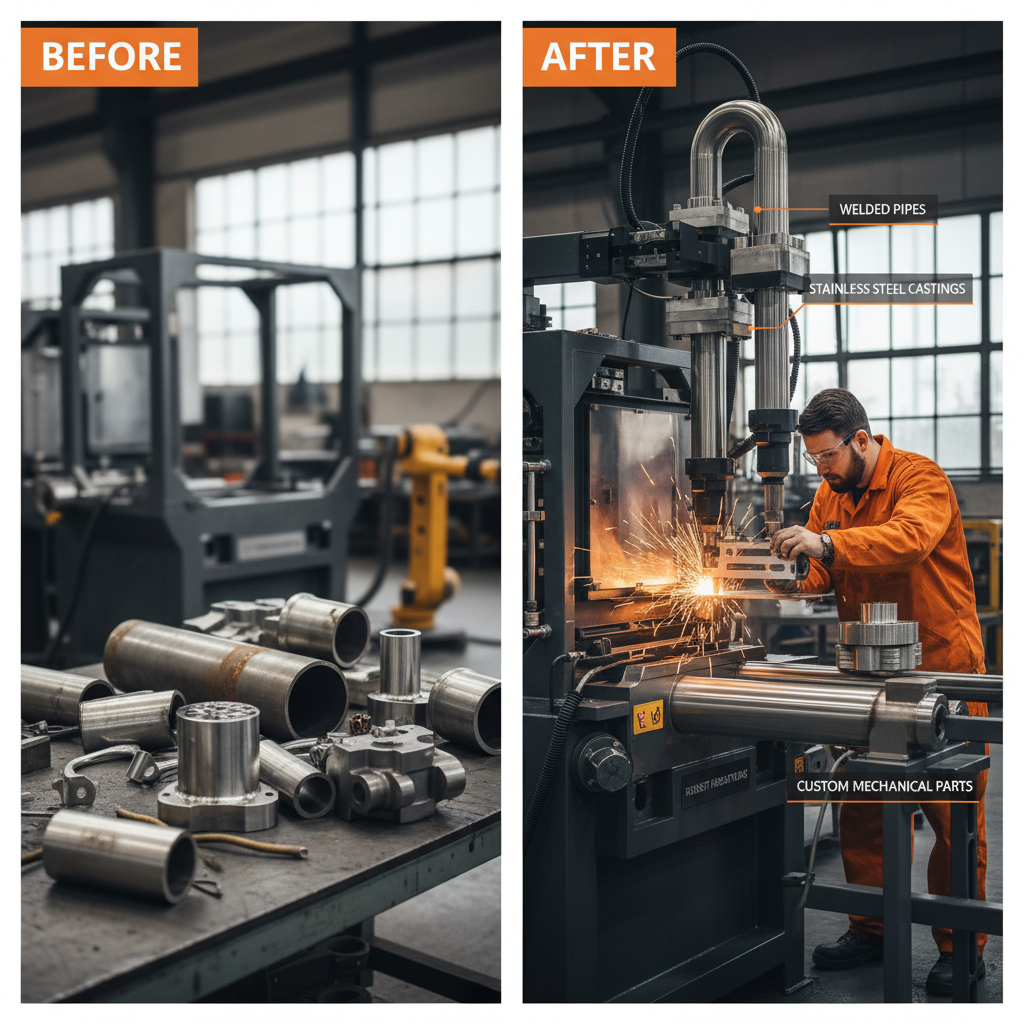






Guide on what products are made from die casting for industry
For procurement managers and technical directors, identifying the ideal manufacturing process for high-volume metal components is a critical balance of cost, precision, and material performance. When evaluating what products are made from die casting, it becomes evident that this process is the backbone of modern industrial production, enabling the creation of complex geometries that would be prohibitively expensive to machine from solid blocks. From lightweight EV battery housings to high-pressure hydraulic valve blocks, the ability to inject molten aluminum or zinc into precision-engineered molds allows for rapid scalability and tight dimensional tolerances.
At HEBEI WINDZONE TRADING CO., LTD., we leverage over 20 years of industry expertise to help global clients navigate the complexities of metal forming. Whether you are optimizing a medical device enclosure for EMI shielding or sourcing heavy-duty gearbox casings for agricultural machinery, understanding the intersection of material alloy selection and tool design is essential for reducing per-part costs and eliminating quality failures in your supply chain.

The Diversified Landscape of Precision Metal Casting Applications
The versatility of the die casting process allows it to serve a vast array of sectors. In the automotive and EV space, the demand for lightweighting has shifted focus toward high-strength aluminum alloys. Components such as EV motor end bells, stator housings, and inverter casings require thin walls (often as low as 0.8mm) combined with exceptional thermal conductivity to manage heat in power electronics.
Beyond transportation, the industrial sector relies on these processes for structural integrity. Planetary gearbox housings and pump volutes must withstand significant vibration and shock loads. Zinc alloys, particularly ZAMAK 3 and 5, are frequently utilized for smaller, intricate brackets where extreme precision and a high-quality surface finish are non-negotiable. In the medical field, non-magnetic MRI scanner brackets and robotic tool handles benefit from the process's ability to maintain complex internal channels and tight tolerances post-polishing.
- Automotive: Transmission valve bodies, brake caliper bodies, and battery trays.
- Electronics: LED heat sinks, 5G radio housings, and servo drive enclosures.
- Medical: X-ray tube housings and diagnostic instrument frames.
- Industrial: Hydraulic valve blocks and compressor cylinder heads.

Technical Material Selection: Aluminum vs. Zinc Alloys
Choosing the correct alloy is the most significant decision in the design phase. Aluminum (such as A380 or ADC12) is the gold standard for components requiring a high strength-to-weight ratio and superior thermal management. It is the primary choice for large structural housings and heat sinks, offering a continuous operating temperature capability of up to 300°C.
Conversely, Zinc die casting is preferred for miniature components with extremely thin walls (down to 0.5mm) and those requiring high-impact strength or intricate decorative plating. Zinc's lower melting point results in less thermal shock to the molds, which often translates to a longer tool life and tighter dimensional consistency for small-scale parts. For engineers, the trade-off usually involves weighing the weight savings of aluminum against the precision and cycle-time efficiency of zinc.
Our technical team focuses on DFM (Design for Manufacturing) to ensure that the chosen material aligns with the part's functional requirements. This includes analyzing draft angles to prevent sticking and implementing MAGMASOFT simulations to predict porosity, ensuring that the final component meets the rigorous standards of ISO 9001:2015.
Overcoming Sourcing Roadblocks in Global Procurement
Many purchasing managers encounter significant "hidden costs" when sourcing cast components. A common issue is the unfair loading of tooling amortization into the per-part price, which can inflate unit costs by over 30% over time. Additionally, poor quality control at the foundry level often leads to high rejection rates during CMM dimensional checks, particularly regarding flash control and draft angle inaccuracies.
To mitigate these risks, it is essential to partner with a supplier that provides full material traceability and spectrometer analysis reports for every heat of metal. Communication gaps are another major risk; vague engineering feedback can lead to prototypes that deviate from 3D models. We solve this by providing detailed DFM feedback within 48 hours, optimizing wall thickness to reduce material waste and eliminate unnecessary secondary machining operations.
For those wondering what products are made from die casting in a cost-effective manner, the secret lies in design optimization. By integrating sealing grooves directly into the casting, we recently helped a US client reduce their per-part cost by 29% while reducing total weight by 1.8kg.
Technical Specification Reference for Cast Alloys
| Parameter | Aluminum (A380/ADC12) | Zinc (ZAMAK 3/5) | Application Focus | Typical Tolerance |
|---|---|---|---|---|
| Tensile Strength | 324 MPa (T6) | 283 MPa | Structural/Lightweight | ±0.05 mm / 25 mm |
| Thermal Conductivity | 96 W/m·K | 113 W/m·K | Heat Dissipation | ±0.03 mm / 25 mm |
| Min. Wall Thickness | 0.8 mm | 0.5 mm | Thin-wall Precision | Standard (CT5) |
| Operating Temp | Up to 300°C | Up to 120°C | Thermal Stability | Ra 1.2 – 3.2 µm |
| Surface Finish | Ra 1.6 – 3.2 µm | Ra 1.2 – 2.5 µm | Aesthetic/Coating | Customizable |
Quality Assurance and Post-Casting Operations
A raw casting is rarely the final product. To meet the stringent requirements of EU and North American markets, comprehensive post-processing is required. Our capabilities include precision CNC machining for critical mating surfaces, vibratory deburring to remove flash, and specialized coatings. For agricultural and marine equipment, we provide hard anodized coatings (40-50 µm) and chromate conversion to prevent corrosion in abrasive environments.
Quality is ensured through a multi-stage inspection process. We utilize CMM reports for dimensional verification and X-ray inspection for high-pressure applications to detect internal porosity. Compliance is non-negotiable; we provide RoHS and REACH declarations along with full chemical composition reports. This transparency ensures that components pass through compliance audits without delaying shipment.
By integrating these operations under one roof—from tooling design and casting to helium leak testing—we eliminate the logistics risks associated with using multiple sub-vendors, ensuring a stable service level and consistent product quality.
Strategic Sourcing Trends for 2026 and Beyond
The industry is moving toward "smarter" casting. We are seeing a surge in the integration of cast components with additive manufacturing for rapid prototyping and a shift toward more sustainable, recycled aluminum alloys to meet corporate ESG goals. The push for electric mobility continues to drive the need for larger, more complex single-piece castings that replace multiple stamped parts, reducing assembly time and increasing vehicle rigidity.
For buyers, the focus is shifting from simple unit-price negotiation to Total Cost of Ownership (TCO). This includes optimizing volumetric weight for sea freight and reducing the "quote-to-sample" cycle time. In the current market, the ability of a supplier to provide MAGMASOFT fill simulations during the RFQ stage is a key indicator of their engineering depth and their ability to avoid costly tooling revisions.
As supply chains diversify, the value of a partner who can provide both technical exchange and strict process control becomes paramount. We recommend that buyers implement a roadmap for cost reduction as volumes scale, moving from initial functional samples to optimized mass production molds.
Frequently Asked Questions on Die Casting Procurement
What products are made from die casting in the automotive industry?
Automotive applications include engine blocks, transmission housings, torque converter components, alternator housings, motor end bells for EVs, and structural battery tray components. Aluminum alloys like A380 and ADC12 are predominantly used due to their strength-to-weight ratio.
How do I choose between aluminum and zinc for my project?
Choose aluminum (A380/ADC12) for parts larger than 300mm, applications with operating temperatures above 100°C, or where weight reduction is critical. Choose zinc (ZAMAK 3) for miniature precision parts, complex thin walls, or components requiring high-end decorative finishes.
What is the typical MOQ for custom cast components at HEBEI WINDZONE?
MOQs vary by complexity. For small zinc castings (under 100g), the MOQ is typically 5,000 pcs. For larger aluminum housings (above 1kg), it starts at 500-1,000 pcs. We also support sample orders of 1-10 pcs for functional verification before mass production.
What are the lead times for tooling and first article samples?
An aluminum die casting mold typically takes 20-35 working days for T1 samples. Production lead time is generally 15-25 working days after sample approval. We maintain die life between 80,000 and 150,000 shots before requiring major maintenance.
How do you ensure compliance with EU and US import standards?
We work with ISO 9001:2015 certified foundries and provide a full documentation package including material certificates (EN 10204 3.1), RoHS/REACH declarations, and dimensional CMM reports. Third-party inspections by SGS or TÜV can be arranged upon request.
Can you help reduce the cost of an existing cast part design?
Yes, through our DFM process. We analyze wall thickness, gating systems, and secondary machining requirements. By optimizing the design using simulation software, we often reduce material usage and eliminate costly machining steps, potentially lowering costs by up to 30%.
Technical References & Industry Sources
- Die Casting Process Overview - Wikipedia
- North American Die Casting Association (NADCA) Standards
- ISO 9001:2015 Quality Management Systems
- EU REACH Compliance Regulations
Ready to optimize your supply chain and reduce casting costs? Get a detailed RFQ analysis from our engineers within 48 hours, including DFM feedback and a complete tooling breakdown. Contact HEBEI WINDZONE TRADING CO., LTD. today to ensure your components meet the highest global standards of precision and durability.
Related Articles